https://dhwnh.com/g/poxi8htfua5a4ef732438f6a4a9beb/?erid=LatgByZj1

Wednesday, March 5, 2025

Imagine being able to track the movement of thousands of animals across the world using a satellite in space. Sounds impossibly futuristic, right?

Well, that’s exactly what a group of scientists are hoping to do using a satellite on the International Space Station (ISS).

Satellites to track animals from space

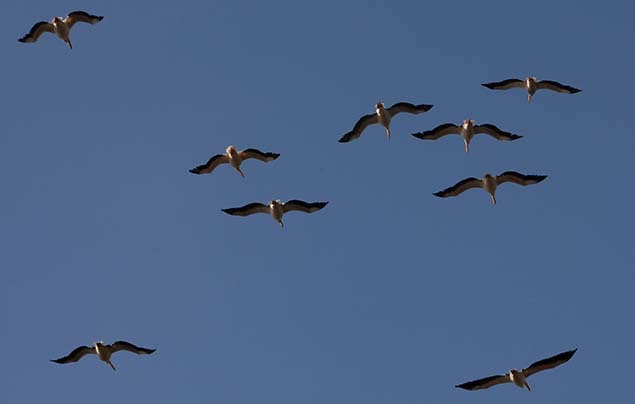
The ICARUS initiative (International Cooperation for Animal Research Using Space) aims to track the migratory patterns of small animals like birds, bats and even insects, to better understand how, when and why animals travel such long distances, often across continents.

With the help of a thumbnail-sized mini transmitter that the animals will wear, newly-installed satellites on the ISS will be able to record the animals’ precise geographic locationstemperature and direction of travel.

It took Oleg Artemjew and Sergej Prokopjew, the astronauts involved in the project, more than seven hours to install the satellite at the ISS!

The scientists hope that the data will be able to provide insight such as where birds’ key eating and drinking stopovers are, and how weather and environment affect their routes and survival numbers.

It’s thought that the study could even help prove or disprove the theory that birds are able to detect natural disasters before they happen, travelling long distances to escape volcanic eruptions or earthquakes.

If all goes well, tracking will begin this autumn… So watch this space!

By Marlon Spiewak


.The Rangers

Big Life employs hundreds of local Maasai rangers to protect the Greater Amboseli ecosystem.  Big Life’s rangers are expertly trained and well-equipped, working around-the-clock to protect and secure some of the world’s most iconic species and their habitats. 

the rangersWith animals constantly moving beyond protected park boundaries into unprotected areas with increasing human populations, the future for conservation will be determined by working closely with and supporting local communities. This is the heart of Big Life’s ethos: if conservation supports the local community, then the local community will support conservation.

These community rangers are the embodiment of that ethos and the heart of Big Life’s operations protecting wildlife and wild lands. They’re on the frontlines of conservation, operating in sometimes dangerous conditions, often away from their families for weeks at a time to protect some of earth’s most treasured wildlife.

Big Life’s rangers conduct extensive daily patrols on foot and by vehicle to gather intelligence, detect and intercept illegal activity, monitor activity via hidden field cameras, and use the latest night-vision and GPS technology to thwart poachers and prevent habitat destruction. Working alongside Kenya Wildlife Service and our network of informers from local communities, Big Life rangers are able to prevent most instances of poaching and successfully apprehend poachers who do manage to kill. Once poachers are apprehended, Big Life works with local prosecutors to ensure that they are punished to the fullest, and most appropriate, extent of the law.

LOOKING FORWARD TO THE WILDLIFE RANGER CHALLENGE

The #WildlifeRangerChallenge is the world’s largest celebration of solidarity, support, and fundraising for wildlife rangers. This year more than 100 teams of rangers spanning the African continent are taking part in a series of challenges, culminating in a grueling 21km race, in uniform while carrying 22kg backpacks.

This global campaign #ForWildlifeRangers is organized by our longtime partners at the Tusk Trust. It brings together competitors, rangers, family members, wildlife supporters, and social media followings 

Raise vital funds for frontline conservation efforts

Drive awareness of the importance of the role rangers play in conservation

Communicate the challenges that these brave men and women must face to protect Africa’s wildlife.

Since its inception five years ago, the WRC has raised $18 million for hundreds of African conservation organizations, including Big Life.

This year, the Scheinberg Relief Fund has generously committed $1 million in matched funds in support of rangers most in need.

To support Big Life in the Wildlife Ranger Challenge, please visit this link. To learn more about this fa

Defenders of Amboseli: Celebrating Our Female Rangers

Herding goats can be tedious, and Constable Jane Tayiana did a lot of it growing up in a remote corner of Big Life’s operating area. The highlight of her days was watching the wild animals grazing nearby, and elephants in particular took her breath away.

She aspired to become a safari guide, but her path eventually led her to Big Life, where she has worked as a community ranger for two years now and loves the fact that she spends her days protecting the animals that she fell in in love with as a child.

Constable Faith Ntooki grew up in the foothills of the Chyulu Hills and is remarkably following in her father’s footsteps. He also worked as a Big Life ranger and instilled in her a passion for wildlife. He sadly passed when she was young, and she was on the verge of dropping out of school when her family couldn’t afford the fees.

Faith’s fortunes changed when she earned a scholarship from Big Life, thanks to the Capricorn Foundation, allowing her to complete her secondary schooling. By becoming a ranger, she is continuing to honor her father’s legacy.  

Both rangers are demonstrating to their local community, and the world, that they are just as capable of protecting Amboseli’s wildlife as their male counterparts. From anti-poaching patrols to preventing human-wildlife conflict, Big Life’s 10 female rangers are working for a more equitable society in a field dominated by men.

Supporting our rangers, including Constables Tayiana and Ntooki, with stable funding is crucial for safeguarding East Africa's wildlife, habitats, and Maasai communities. Please join our Ranger Club with a monthly contribution to sustain their efforts. Every contribution makes a difference!

New members or those increasing their July donation receive a special gift.  You’ll also enjoy exclusive program updates, 20% off Big Life merchandise in our e-store, and the satisfaction of directly impacting conservation efforts in East Africa. Thank you for your support! Photo: 

Herding goats can be tedious, and Constable Jane Tayiana did a lot of it growing up in a remote corner of Big Life’s operating area. The highlight of her days was watching the wild animals grazing nearby, and elephants in pa took her breath away.

She aspired to become a safari guide, but her path eventually led her to Big Life, where she has worked as a community ranger for two years now and loves the fact that she spends her days protecting the animals that she fell in in love with as a child.

Constable Faith Ntooki grew up in the foothills of the Chyulu Hills and is remarkably following in her father’s footsteps. He also worked as a Big Life ranger and instilled in her a passion for wildlife. He sadly passed when she was young, and she was on the verge of dropping out of school when her family couldn’t afford the fees.

Faith’s fortunes changed when she earned a scholarship from Big Life, thanks to the Capricorn Foundation, allowing her to complete her secondary schooling. By becoming a ranger, she is continuing to honor her father’s legacy.  

Both rangers are demonstrating to their local community, and the world, that they are just as capable of protecting Amboseli’s wildlife as their male counterparts. From anti-poaching patrols to preventing human-wildlife conflict, Big Life’s 10 female rangers are working for a more equitable society in a field dominated by men.

Supporting our rangers, including Constables Tayiana and Ntooki, with stable funding is crucial for safeguarding East Africa's wildlife, habitats, and Maasai communities. Please join our Ranger Club with a monthly contribution to sustain their efforts. Every contribution makes a difference!

New members or those increasing their July donation receive a special gift.  You’ll also enjoy exclusive program updates, 20% off Big Life merchandise in our e-store, and the satisfaction of directly impacting conservation efforts in East Africa. Thank you for your support! Photo: Joshua Clay


.


.

Monday, March 3, 2025


The biological and geological future of Earth can be extrapolated based on the estimated effects of several long-term influences. These include the chemistry at Earth's surface, the cooling rate of the planet's interior, gravitational interactions with other objects in the Solar System, and a steady increase in the Sun's luminosity. An uncertain factor is the influence of human technology such as climate engineering, which could cause significant changes to the planet. For example, the current Holocene extinction is being caused by technology, and the effects may last for up to five million years. In turn, technology may result in the extinction of humanity, leaving the planet to gradually return to a slower evolutionary pace resulting solely from long-term natural processes.

Over time intervals of hundreds of millions of years, random celestial events pose a global risk to the biosphere, which can result in mass extinctions. These include impacts by comets or asteroids and the possibility of a near-Earth supernova—a massive stellar explosion within a 100-light-year (31-parsec) radius of the Sun. Other large-scale geological events are more predictable. Milankovitch's theory predicts that the planet will continue to undergo glacial periods at least until the Quaternary glaciation comes to an end. These periods are caused by the variations in eccentricity, axial tilt, and precession of Earth's orbit. As part of the ongoing supercontinent cycle, plate tectonics will probably create a supercontinent in 250–350 million years. Sometime in the next 1.5–4.5 billion years, Earth's axial tilt may begin to undergo chaotic variations, with changes in the axial tilt of up to 90°.

The luminosity of the Sun will steadily increase, causing a rise in the solar radiation reaching Earth and resulting in a higher rate of weathering of silicate minerals. This will affect the carbonate–silicate cycle, which will reduce the level of carbon dioxide in the atmosphere. In about 600 million years from now, the level of carbon dioxide will fall below the level needed to sustain C3 carbon fixation photosynthesis used by trees. Some plants use the C4 carbon fixation method to persist at carbon dioxide concentrations as low as ten parts per million. However, in the long term, plants will likely die off altogether. The extinction of plants would cause the demise of almost all animal life since plants are the base of much of the animal food chain.

In about one billion years, solar luminosity will be 10% higher, causing the atmosphere to become a "moist greenhouse", resulting in a runaway evaporation of the oceans. As a likely consequence, plate tectonics and the entire carbon cycle will end. Then, in about 2–3 billion years, the planet's magnetic dynamo may cease, causing the magnetosphere to decay, leading to an accelerated loss of volatiles from the outer atmosphere. Four billion years from now, the increase in Earth's surface temperature will cause a runaway greenhouse effect, creating conditions more extreme than present-day Venus and heating Earth's surface enough to melt it. By that point, all life on Earth will be extinct. Finally, the planet will likely be absorbed by the Sun in about 7.5 billion years, after the star has entered the red giant phase and expanded beyond the planet's current orbit.


         Maharashtra History

History of MaharashtraThe name Maharashtra is believed to be originated from rathi, which means chariot driver. Maharashtra entered the recorded history in the 2nd century BC, with the construction of its first Buddhist caves. The name, Maharashtra first appeared in a 7th century in the account of a contemporary Chinese traveler, Huan Tsang. According to the recorded History, the first Hindu King ruled the state during 6th century, based in Badami.


Shivaji Bhosle, the founder of the Maratha Empire, did a lifelong struggle against the Mughals. By 1680, the year of Shivaji's death, nearly the whole of Deccan belonged to his empire. Shivaji was a great warrior and one of the finest rulers of India, so he holds the highest place in Maratha history.


Sambhaji succeeded Shivaji, but he is not great as his father Shivaji. 1680 to 1707 is known as the period of instability in the history of Maharashtra. Balaji Vishwanath (1712-1721), Bajirao Peshwa (1721-1740), Nanasaheb Peshwa (1740-1761), 'Thorale' Madhaorao Peshwa (1761-1772, Narayanrao Peshwa (1772-1773), 'Sawai' Madhaorao Peshwa (1774-1795) and 'Second' Bajirao Peshwa - 1795 to 1802 were the other important rulers of Maharashtra.


The fall of Ahmednagar fort in 1803 marked the end of Indian rule and supremacy of British in Deccan. In 1804, General Wellesly proclaimed the Deccan in a state of chaos, established military rule and the Peshwas remained rulers for namesake.


The present state was formed in 1960 with Bombay as the capital, when the Marathi and Gujarati linguistic areas of former Bombay state were separated. Maharashtra became the main channel of cultural exchange between southern to northern India.


Friday, February 28, 2025

A "trip education," also called an "educational trip" or "study tour," is a journey undertaken by a group of people, usually students, to a location outside their normal environment with the primary purpose of learning and experiencing new things through direct observation and interaction, often enhancing classroom knowledge with hands-on experiences in a different setting; essentially, it's a way to learn through travel, exposing individuals to new cultures, environments, and perspectives. 

Key points about trip education:

Experiential learning:

The core benefit of a trip education is the opportunity for "experiential learning," where students actively engage with a subject by seeing and doing rather than just reading about it. 

Diverse environments:

Educational trips can take students to historical sites, museums, natural landscapes, industries, or communities, providing exposure to different environments and cultures. 

Social and personal development:

Beyond academic learning, trip education can foster teamwork, communication skills, independence, and self-confidence as students navigate new situations with their peers. 

Curriculum connection:

Well-planned educational trips are directly linked to classroom curriculum, allowing students to deepen their understanding of concepts they are studying. 

Examples of trip education activities:

Visiting a historical landmark and participating in a guided tour

Conducting field research in a natural ecosystem

Attending workshops or presentations by experts at a relevant location 

Benefits of trip education:

Enhanced learning: Deeper understanding of concepts through direct observation and interaction

Improved critical thinking: Analyzing and reflecting on new experiences

Cultural awareness: Exposure to different customs, traditions, and perspectives

Social bonding: Building relationships with peers through shared experiences 

Field trip - Wikipedia

A field trip or excursion is a journey by a group of associated peers, such as coworkers or school students, to a place away from ..

What is Educational Trave — Educational travel is about experiential learning. Students on an educational journey see and enrich their knowledge of...


ACIS Educational Tours

What is the importance of excursions and educational tours for students?

Educational trips provide an opportunity for kids to spend time with each other in a different environment. They discuss their exp.

Importance of Educational Tours For School Student — Educational trips involve group activities and require students to work together, which helps them develop teamwork skills and social 


What's the purpose of educational tours?


Educational trips expose students to real-life situations, which can help them develop critical thinking skills and make informed decisions.

What Is Educational TraEducational travel, also known as edutourism, combines adventure with structured learning. Unlike conventional trips that focus on leisure, educational travel ...


Field Trips and Their Importance in a Well-Rounded ...

Ecole Mondiale World School

https://www.ecolemondiale.org › bulletins-board › field-t...

Going on a field trip enhances their critical thinking skills and gives students a chance to think about a topic or theme from a different perspectiv

Education trips provide opportunities for students to learn about different cultures, customs, and ways of life, promoting cultural awareness and understanding.


                                           Gorilla tracking in Rwanda & Uganda
Watching gorillas is often described as one of the most life-changing of all wildlife experiences. It’s often a moving experience too – perhaps because of their intimidating size combined with their unexpected gentle grace, or because they behave so much like us. And whether you want to see mountain gorillas in Uganda’s Bwindi Impenetrable Forest or in Rwanda’s Virunga Mountains, we have a responsible gorilla safari for you.
  •  A Big Five safari in Africa
You can practically take your pick of African safaris – they come in almost every shape, size and budget. Go for a classic jeep safari in East Africa, following the Great Migration across the savannah, or opt for a self drive holiday in South Africa and Namibia. The intrepid can even step out of their vehicles in Botswana and Zambia for a Big Five bush walk accompanied by an expert guide. Other guides will whisk you out on a dugout canoe along the elephant-friendly waterways of the Okavango Delta.
The Big Five (that’s the inimitable lion, elephant, buffalo, leopard and black rhino) tend to take centre stage, but don’t forget that other creatures such as hippos, hyenas and zebra can be just as thrilling to see. Check out our African safaris to see where your adventure could take you.
  •  Polar bears in the Arctic
Polar bears are an iconic Arctic species. But with rising concerns over their ever-shrinking hunting grounds, where ice is being lost to global warming more quickly than bears can adapt, it is more important than ever to make sure that your bear watching holiday is run responsibly. That’s why all our polar bear watching holidays have to adhere to criteria that ensures your trip minimises environmental impacts to help conserve these magnificent creatures. Have a look at our Arctic cruise holidays to find the ultimate wild polar bear experience in the company of wildlife experts, researchers and conservationi.
  •  Tiger safaris
Tiger safaris awaken something magical within. They can transport us back to childhood dreams and recall poetry in motion. And there’s something spiritual about seeing this most iconic of big cats prowling its natural territory, especially when one considers how endangered they are, with around 3,900 tigers left in the wild. Our responsible tiger safaris in India, Bhutan, Nepal and Bangladesh can offer unforgettable sightings, of course. But they also help to ensure that these magnificent creatures will still be around for new generations to admire.
  •    Galapagos Islands
The Galapagos Islands are one of the most biologically diverse areas on the planet and a must for any wildlife enthusiast. The archipelago’s most famous visitor, Charles Darwin, began to form his theory of evolution here and it’s easy to see why. With birds and animals that are found nowhere else on earth, and which are completely unafraid of humans, the Galapagos Islands are a wildlife experien.
Watching as an enormous whale breeches the ocean’s surface and disappears to the ocean depths with a splash really can take your breath away. Whale watching is an increasingly popular activity, with boat trips operating wherever the whales are. From Alaska to Argentina and from Iceland to Italy, all our whale watching holidays are run responsibly, ensuring that whilst you get close enough to hear the huff of a whale’s breath before a deep dive, you won’t be disturbing these ocean giants. Whether you want to see hunting orcas or mighty humpbacks, we have a range of whale watching trips to choose from.'
  •    Grizzly bears in the Rockies
Grizzly bears, a subspecies of brown bears, are amongst the eight remaining bear species on the planet. Many of the bear species, such as the sloth bear, are endangered or vulnerable but brown bears aren’t among them, so hopefully spotting one shouldn’t be too tricky! Watching a creature so huge and powerful can be an awe-inspiring experience and if you go to the right place at the right time of year, you might just be lucky enough to spot some little bear cubs out to play. Your best bet is to take a look at our bear watching holidays.
Watching orangutans in BorneoWatching orangutans in the wild makes regular appearances on travellers’ wish lists – and with good reason. Watching orangutans can be magical. Widespread deforestation to make way for palm oil plantations has reduced this species’ habitat to a tiny fraction of what it once was, and they are now listed as endangered. It’s therefore more important than ever to ensure that responsible tourism contributes to their conservation. All our orangutan holidays abide by a code of conduct and most holidays to Sabah include visit to Sepilok Orangutan Rehabilitation Centre, which houses and then releases injured orangutans back into the wild when possible.
  •  Antarctica
The vast, frozen continent of Antarctica is one of the planet’s last true wilderness. Officially uninhabited and owned by no one, it is a place like no other on earth. But it’s not empty; several penguin species, seal colonies, whales and albatrosses are among the creatures that call this frozen desert home. Small ship cruises incorporate onboard lecture programmes by biologists, geologists, conservationists and marine scientists, bringing the scenes to life. Have a look at our holidays in Antarctica to see which expedition is up your street.
  •  Wildlife in Europe
Europe’s wildlife may not feature on many travel posters (polar bears aside), but it is no less impressive than other places around the world. Whether you want to see reintroduced bison in the primeval forests of Poland, sea turtles in the Greek Islands, wolves and moose Sweden, or lynx in Romania, we have an exciting (and ever-growing) range of wildlife holidays in Europe.
And finally...
Don’t forget that all of our trips have to meet our criteria for environmental, social and economic responsibility, which means that they minimise their environmental impact and benefit the local community. They also abide by strict codes of conduct so as not to distress the wildlife (say, not getting too close and ending encounters when animals leave, rather than following them). Also, many of our wildlife watching specialists regularly donate to and support conservation projects to protect and preserve endangered critters. 
 

.

Thursday, February 27, 2025

TADOBA FOREST (NATURE)

The Tadoba Andhari Tiger Reserve is a wildlife sanctuary in Chandrapur district of Maharashtra state in India. It is Maharashtra's oldest and largest national park. Created in 1955, the reserve includes the Tadoba National Park and the Andhari Wildlife Sanctuary. The reserve consists of 577.96 square kilometres (223.15 sq mi) of reserved forest and 32.51 square kilometres (12.55 sq mi) of protected forest.     

Etymology

"Tadoba" is taken from the name of the god "Tadoba" or "Taru", worshipped by the tribal people who live in the dense forests of the Tadoba and Andhari region; "Andhari" refers to the Andhari river that meanders through the forest.


History

Legend holds that Taru was a village chief who was killed in a mythological encounter with a tiger. Taru was deified and a shrine dedicated to Taru now exists beneath a large tree on the banks of Tadoba Lake. The temple is frequented by adivasis, especially during a fair held annually in the Hindu month of Pausha (December–January).


The Gond kings once ruled these forests in the vicinity of the Chimur hills. Hunting was banned in 1935. Two decades later, in 1955, 116.54 square kilometres (45.00 sq mi) of this forest area was declared a national park. Andhari Wildlife Sanctuary was created in the adjacent forests in 1986. In 1995, the park and the sanctuary were merged to establish the present tiger reserve.


Geography

Tadoba Andhari Reserve is the largest national park in Maharashtra. The total area of the reserve is 625.4 square kilometres (241.5 sq mi). This includes Tadoba National Park, with an area of 116.55 square kilometres (45.00 sq mi) and Andhari Wildlife Sanctuary with an area of 508.85 square kilometres (196.47 sq mi). The reserve also includes 32.51 square kilometres (12.55 sq mi) of protected forest and 14.93 square kilometres (5.76 sq mi) of uncategorised land.


To the southwest is the 120 hectares (300 acres) Tadoba Lake which acts as a buffer between the park's forest and the extensive farmland which extends up to Irai water reservoir. This lake is a perennial water source which offers a good habitat for Muggar crocodiles to thrive. Other wetland areas within the reserve include Kolsa Lake and the Andhari river.


Tadoba Reserve covers the Chimur Hill, and the Andhari sanctuary covers the Moharli and Kolsa ranges. Nearest village from this place is Durgapur. It is bounded on the northern and western sides by densely forested hills. Thick forests are relieved by smooth meadows and deep valleys as the terrain slopes from north to south. Cliffs, talus, and caves provide refuge for several animals. The two forested rectangles are formed of the Tadoba and Andhari ranges. The south part of the park is less hilly than the remainder.


Climate

Winters stretch from November to February; during this season, daytime temperatures are in the 25°–30 °C range and the park is lush green. While summers are extremely hot in Tadoba, with the temperature rising to 47 °C, it is the ideal time to sight mammals near lakes as vegetation is minimal. The monsoon season begins in June; the area receives heavy rainfall during this season (approx.1275 mm) and humidity hovers around 66%.

Flora


A path in Tadoba Forest


This section needs additional citations for verification. Please help improve this article by adding citations to reliable sources in this section. Unsourced material may be challenged and removed. (October 2023) (Learn how and when to remove this message)

Tadoba Reserve is a predominantly southern tropical dry deciduous forest with dense woodlands comprising about eighty seven per cent of the protected area. Teak is the predominant tree species. Other deciduous trees found in this area include crocodile bark, bija, dhauda, hald, salai, semal and tendu. Beheda, hirda, karaya gum, crepe myrtle, flame-of-the-forest, and Lannea coromandelica (wodier tree). Axlewood (a fire-resistant species), black plum and arjun are some of the other tropical trees that grow in this reserve.


Patches of grasses are found throughout the reserve. Bamboo thickets grow throughout the reserve in abundance. The climber kach kujali (velvet bean) found here is a medicinal plant used to treat Parkinson's disease. The leaves of bheria are used as an insect repellent and bija is a medicinal gum. Beheda is also an important medicine found here.


Fauna


Sambar-Tadoba TR


Leopard in Tadoba TR


Tiger chasing a wild pig


Sloth bear in Tadoba TR


Tigress Maya with her cubs

According to Dr Bilal Habib, Head of Wildlife Institute of India's Department of Animal Ecology and Conservation Biology, 88 individual Tigers were recorded using the SECR Methodology in 2020 (44 in the core zone, 23 in the buffer zone and 21 in the core and buffer zone). There are about 115 plus tigers in Tadoba, 88 in the forest and 27 immediately outside the reserve.

Aside from the keystone species, the Bengal tiger, Tadoba Tiger Reserve is home to other mammals, including: Indian leopards, sloth bears, gaur, nilgai, dhole, small Indian civet, jungle cats, sambar, barking deer, chital, chausingha and honey badger. Tadoba lake sustains the marsh crocodile, which was once common all over Maharashtra. Reptiles here include endangered Indian python and common Indian monitor. Terrapins, Indian star tortoise, Indian cobra and Russel's viper also live in Tadoba. The lake contains a wide variety of water birds, and raptors. 195 species of birds have been recorded, including 3 endangered species. The grey-headed fish eagle, crested serpent eagle, and changeable hawk-eagle are some of the raptors seen in the park. Other bird species found in the reserve include the orange-headed thrush, Indian pitta, crested treeswift, stone curlew, crested honey buzzard, paradise flycatcher, bronze-winged jacana, lesser goldenbacked woodpecker, various warblers, black-naped blue flycatcher and the Indian peafowl.74 species of butterflies have been recorded including pansies, monarchs, mormons and swordtails.


Insect species include the endangered danaid egg-fly and great eggfly. Dragonflies, stick insects, jewel beetles and the praying mantis are other insects in the reserve. The signature spider, giant wood spider and red wood spiders are often seen during the monsoon and soon after. Some hunting spiders like the wolf spiders, crab spiders and lynx spiders are also common. A black panther was spotted in May 2018. As per the officials, it is a rare sight since black panthers normally live in evergreen forests and not in dry deciduous forests like Tadoba Tiger Reserve.

Threats

There are 41,644 people living in and around the reserve in fifty nine villages of which five are inside the core zone. These villages in the core zone still farm inside the core area. The process of rehabilitation is going on. Recently the Navegaon village was rehabilitated, and grassland is expected on the place where the village existed. There are 41,820 cattle within the core and buffer zone. While cattle grazing is not allowed in the core zone, regulated grazing in the buffer zone is allowed to cattle of the village inhabitants. However, cattle in peripheral villages sometimes find their way into the reserve and cause additional damage to the habitat.


Forest fires are a constant problem in the dry season,] consistently burning between 2% and 16% of the park each year. The killing of domestic livestock by tigers and leopards is a frequent phenomenon in neighboring villages. This has an adverse impact on the economic condition of the local people and results in a negative view of the reserve management. In the year 2013, at least four people and 30-50 cattle were killed by leopards, tigers or sloth bears. Densely forested hills form the northern and western boundary of the tiger reserve. The elevation of the hills ranges from 200 metres (660 ft) to 350 metres (1,150 ft).


References

 "Tadoba-andhari Tiger Reserve". Reserve Guide - Project Tiger Reserves in India. National Tiger Conservation Authority. Archived from the original on 27 May 2004. Retrieved 29 February 2012.

 "Tadoba-Andhari Tiger Reserve: History". Sanctuary Asia. Retrieved 29 February 2012.

 "Tadoba Andhari Tiger Reserve". Times group. Times of India. 26 May 2017. Retrieved 20 June 2021.

 "Climate and Weather of Tadoba National Park". www.tadobanationalpark.in. Retrieved 7 May 2019.

 Tadoba-Andhari Tiger Reserve-Habitat, Sanctuary Asia, retrieved 29 February 2012

 "Incredible Tadoba". incredibletadoba.com. 11 August 2022. Retrieved 8 September 2022.

 "Man-animal conflict on the rise in Maharashtra: Meditating monk killed by leopard". Times Now News. 13 December 2018. Retrieved 7 May 2019.

 "Tadoba-Andhari Tiger Reserve-Wildlife". Sanctuary Asia. Retrieved 29 February 2012.

 Pinjarkar, V. (2018). "Maharashtra: Rare black panther spotted in tiger reserve". The Times of India. Retrieved 1 May 2019.

 "WWF-India and TRAFFIC strengthen capacity and law enforcement in Maharashtra's tiger areas". WWF-India. 1 August 2009. Retrieved 25 June 2020.

External links


Wikimedia Commons has media related to Tadoba Andhari Tiger Reserve.

Tiger conservation: Maharashtra villagers get first instalment of rehab package, The Hindu, 29 February 2012

Chandrapur-information portal

Incredible Tadoba



Imagine being able to track the movement of thousands of animals across the world using a satellite in space. Sounds impossibly futuristic, ...